Leadership & Identity After the Military, Rediscovering Who You Are Beyond the Uniform
Leaving the military means redefining your identity and leadership beyond the uniform. Explore how veterans can embrace this transformation while honoring their service and protecting their mental health.
Who Are You Without the Uniform?
It's one of the most profound questions a veteran can face, and one that the civilian world rarely prepares you for. After years of service, the uniform isn't just what you wore. It was who you were. It defined your role, your rank, your relationships, and your daily purpose.
When that chapter closes, many veterans are left asking a deeply human question: Who am I now?
This isn't a sign of weakness. It's a sign that you gave your service everything you had. And it's exactly why the work of rebuilding identity after the military is some of the most important work a veteran can do.
The Identity Gap in Military Transition
Psychologists who study veteran transition have identified a phenomenon known as the "identity gap", the disorientation that occurs when a person's primary source of identity (in this case, military service) is suddenly removed. The symptoms can range from mild restlessness to significant mental health challenges, including depression, anxiety, and in some cases, crisis.
Understanding this gap, and naming it, is the first step toward bridging it.
For many veterans, the identity gap is compounded by the loss of brotherhood: the deep, unconditional bonds formed with fellow service members. These relationships, forged through shared hardship and mutual dependence, are often described as the most meaningful of a veteran's life. Losing daily access to that sense of belonging can be profoundly painful.
Leadership Doesn't End at the Gate
Here's what the civilian world doesn't always tell veterans: your leadership didn't expire when your service did. The qualities that made you effective in uniform, decisiveness, accountability, composure under pressure, the ability to inspire others, are exactly what families, organizations, and communities need.
The challenge is that civilian environments often don't have clear hierarchies, defined roles, or explicit chains of command. Leadership becomes less about rank and more about influence, relationship, and vision. For veterans, this requires a deliberate shift, not in values, but in approach.
Reframing leadership after service means:
- Moving from authority-based leadership to influence-based leadership
- Finding new "missions", in career, family, community, and service, that channel your purpose
- Mentoring the next generation of veterans and young leaders
- Bringing military-grade accountability and integrity to every organization you join
Protecting Your Mental Health During the Identity Shift
The identity transition is not just a professional challenge, it's a mental and emotional one. Veterans are significantly more likely than their civilian peers to experience depression, PTSD, and feelings of isolation. Acknowledging this reality is not a sign of weakness; it is an act of the same situational awareness that kept you alive in the field.
Key mental health strategies for the post-service identity transition:
- Stay connected. Isolation is one of the greatest risk factors for veteran mental health struggles. Prioritize relationships, with family, peers, and fellow veterans.
- Seek support early. You don't need to be in crisis to benefit from therapy, peer support, or counseling. The strongest leaders know when to ask for help.
- Establish routine and purpose. Structure and mission were built into military life. Intentionally recreate them in your civilian chapter.
- Honor your service without being defined only by it. Your military chapter is a vital part of your story, not the whole story.
Beyond the Brotherhood, Because No Veteran Should Walk This Path Alone
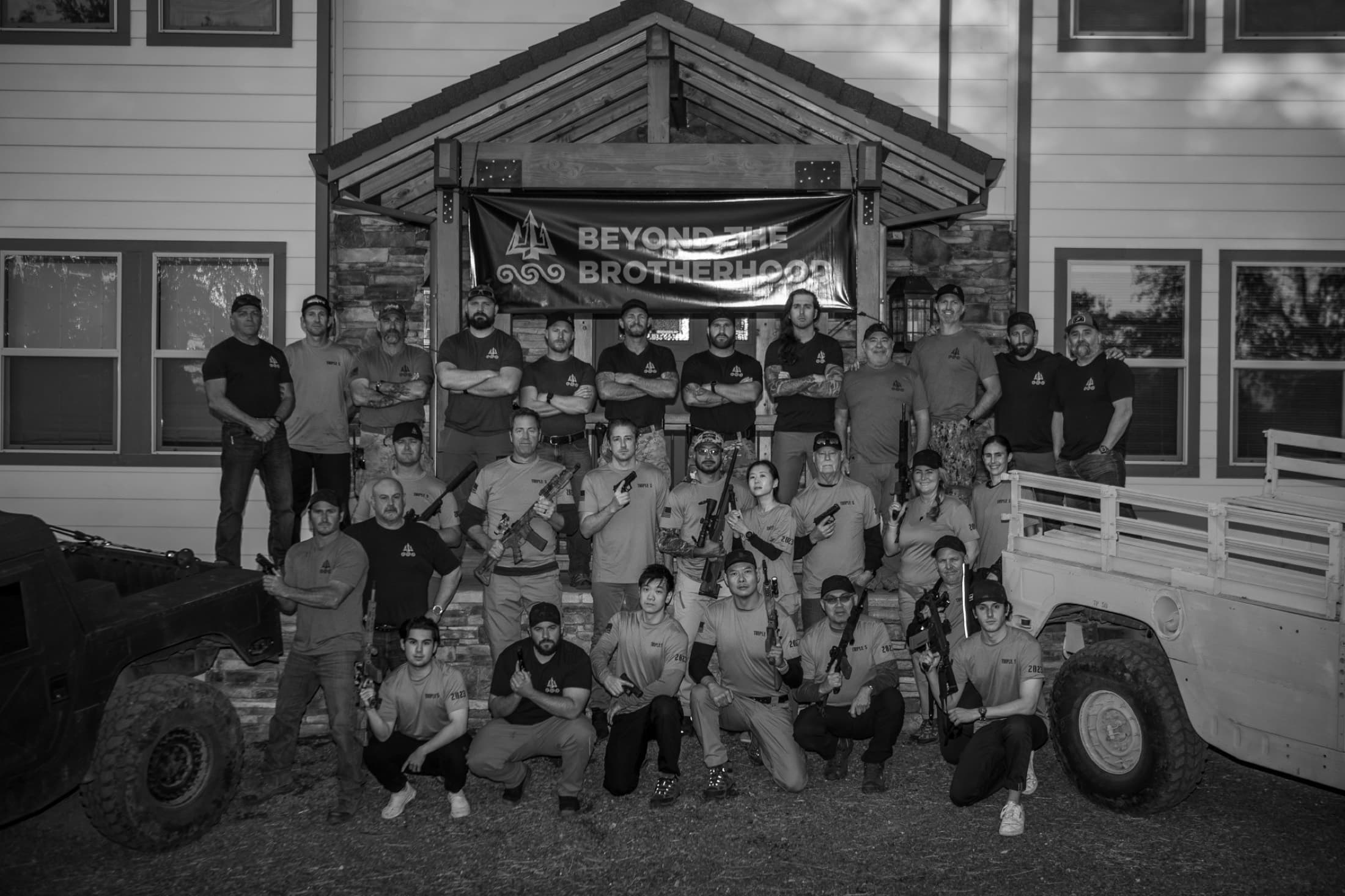
The transition from military to civilian life, the journey of rediscovering identity, and the work of building a new chapter after service, these are not solo missions. They require community, mentorship, honest conversation, and the kind of brotherhood that doesn't end when the enlistment does.
That is the heart of Beyond the Brotherhood.
We exist to ensure that every veteran has the support, resources, and community they need to not just survive the transition, but to lead in the next chapter of their lives with clarity, confidence, and purpose.
Connect with us. Your next mission starts here.